
How to Add Additional Earnings To Your Paystubs
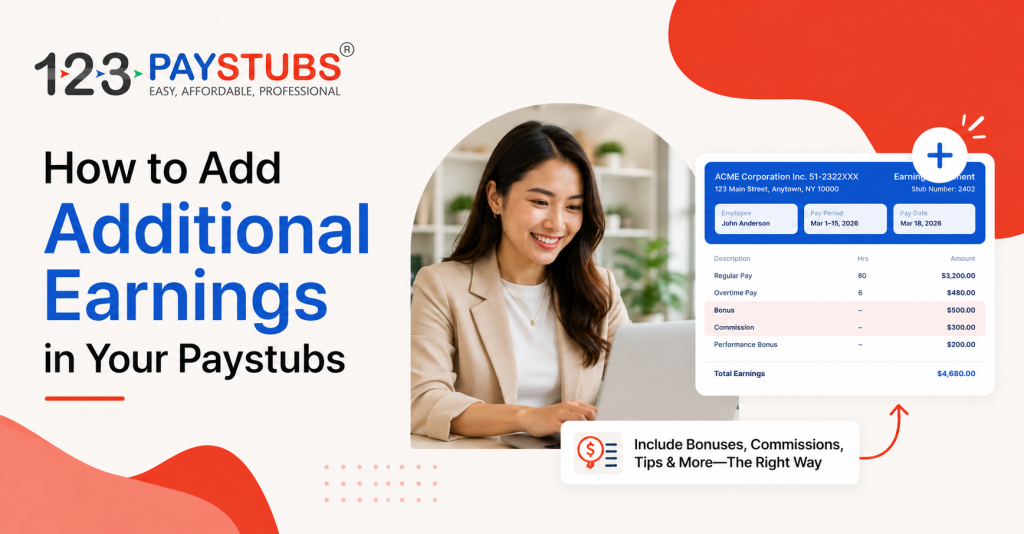
Payroll rarely stays simple for long. An employee covers a last-minute shift and racks up overtime. You decide to reward the team with a year-end bonus. A staff member needs extended FMLA leave.
Suddenly, payday arrives and your standard pay figures no longer tell the whole story. That’s where additional earnings come in — and knowing how to handle them correctly keeps your payroll accurate, compliant, and transparent.
What are Additional Earnings?
Additional earnings are supplementary taxable compensation paid to an employee outside of their standard wages, salary, or regular pay rate.
They are separate from base pay components like tips or commissions, which are already factored into gross pay, and must be itemized distinctly on the paystub.
Common types of additional earnings include:
- Overtime pay, such as time-and-a-half or double time
- Bonuses, including performance, holiday, signing, or discretionary bonuses
- Severance pay
- Salary advances
- Awards or prizes
- Holiday pay above regular wages
- Extended FMLA paid leave
- COVID-era or employer-provided paid sick leave for self or dependent care
- Custom earnings specific to your industry
Why Additional Earnings Should Be Itemized
Under the Fair Labor Standards Act (FLSA) and many state wage laws, employers are required to clearly itemize all forms of compensation paid during a pay period.
Mixing additional earnings into base pay can:
- Obscure the true pay breakdown
- Create problems when calculating overtime rates
- Complicate year-end tax reporting
- Increase the risk of employee pay disputes
Keeping additional earnings separate ensures accuracy for both you and your employees.
In 2026, worker pay transparency has become an increasing compliance focus across multiple states. Clearly documented paystubs — including all additional earnings — reduce the risk of wage disputes and audits.
How Additional Earnings Affect Payroll Taxes
Most additional earnings are subject to standard payroll taxes, including:
- Federal income tax withholding
- State income tax withholding
- Social Security
- Medicare
Bonuses and supplemental wages may be subject to the IRS supplemental wage withholding rate, currently 22% for federal withholding up to $1 million, or they may be aggregated with regular wages depending on how they are issued.
A paystub generator that handles both methods helps protect you from under-withholding.
How to Add Additional Earnings with 123PayStubs
Adding additional earnings in 123PayStubs is straightforward:
- Sign in to your 123PayStubs account and click Create Paystub.
- Enter your standard company, employee, and pay schedule information.
- Select the Additional Earnings and Deductions add-on.
- Click the Additional Earnings link, select the type from the dropdown menu, such as bonus, overtime, holiday pay, or custom earnings, and enter the amount.
- Review the updated calculations — all taxes will be recalculated automatically.
- Download, print, or email the completed paystub directly to your employee.
Because 123PayStubs recalculates all federal, state, and FICA taxes automatically when additional earnings are added, there’s no risk of manually missing an adjustment.
Every paystub stays accurate regardless of how complex the pay period gets.
Document Every Dollar Accurately
Whether it’s a one-time bonus or recurring supplemental pay, 123PayStubs makes it easy to document every dollar accurately and professionally.Visit 123PayStubs.com to get started.
Ready to Add Additional Earnings?
Incorporate bonuses, commissions, tips, and more into your paystubs easily, affordably, and professionally.
Create Your Paystub Now
Leave a Comment